Back patios and seating areas
This is where most people start, since you look at a patio every day. The pattern breaks up a big flat area that plain gray can make feel bare.
Tired of plain gray? We pour, stamp and seal a patterned patio, walk or driveway, with a sealer chosen for how much color you want.
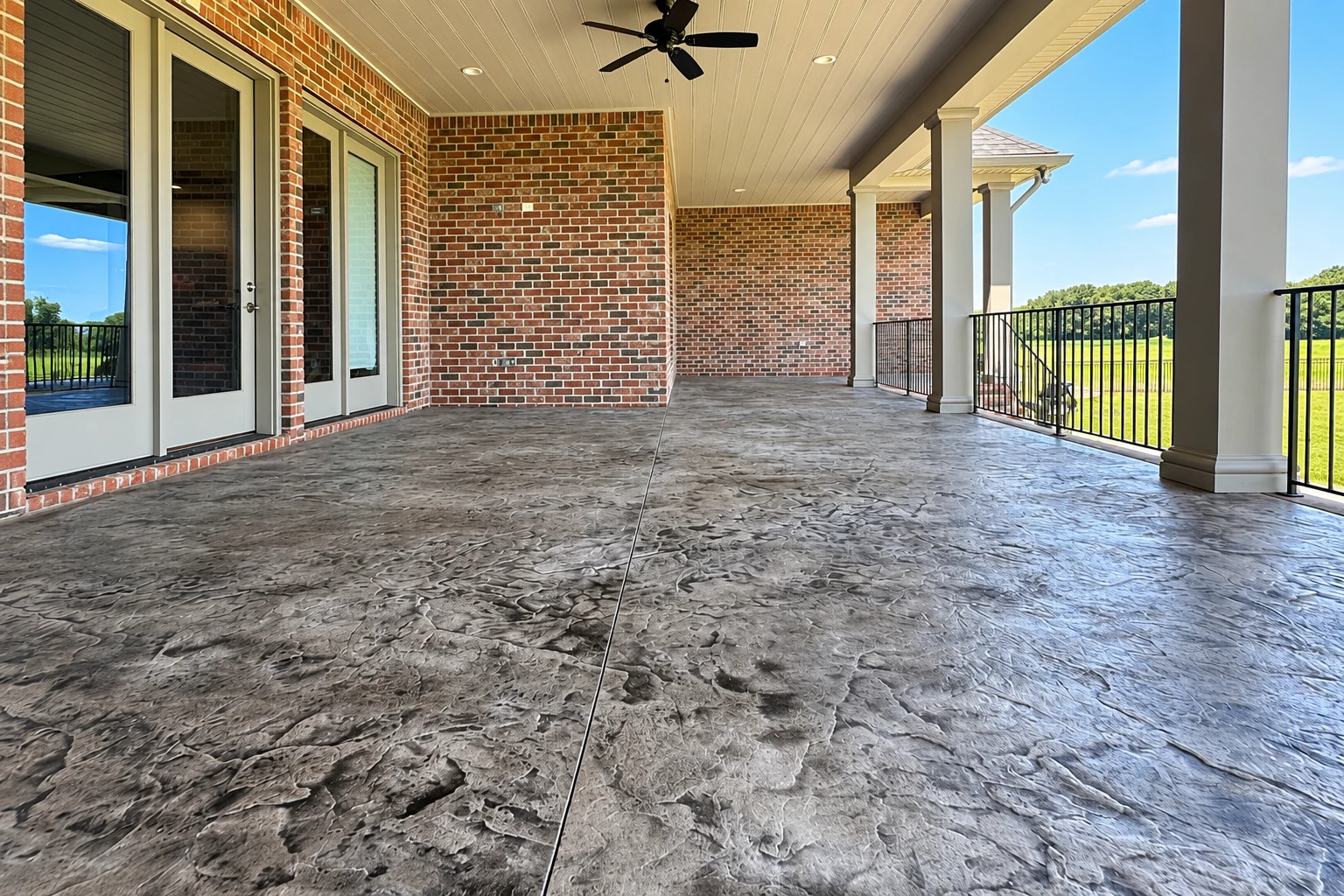
Stamped concrete in Chino Hills is a patio, driveway or walk that's poured and finished like any slab. While it's still soft, it's pressed with stamps and texture rollers so it reads like stone, brick or tile. You get a patterned look in one solid slab, sealed once it has cured.
Price mostly follows size and what's under the slab. If there's old concrete to break out or soft ground to dig down, that's more labor before we pour. A busier pattern, a border, a second color or a film-forming sealer adds to it too. You'll get your figure in writing at the estimate, with what's included and what isn't.
The schedule turns on weather and curing, the wait while fresh concrete hardens and gains strength. You stay off the slab for a while, and sealing comes later still. A driveway that reaches the street can add a city permit step. The state contractor board counts forming, pouring and finishing flat concrete as licensed work, and we're licensed and insured.
I started out writing up driveways and patios for homeowners, so I know which lines confuse people. Your estimate says what's in it, what isn't and why the base costs what it does.
Concrete cracks, slabs move and stamped work needs resealing now and then. I'd rather you hear that before you sign than after, so you know exactly what you're buying.
I opened here in 2023 after learning the work on a crew. I write every estimate myself, a crew lead runs the job and I stop by while it's going.
The part you'll never see is the part I care about most. We dig out soft dirt and pack a firm subgrade, what the slab sits on, because a slab poured over dirt that was only raked level settles right along with it. We also check where your water runs and slope the slab away from the house. When budgets get tight, base prep is usually the first thing people want to cut. I'll push back on that every time, because no pattern can fix a slab that sinks.
We set rebar, the steel that keeps a cracked slab from pulling apart. Then we pour early in the day when we can, since a slab that dries too fast in afternoon heat ends up with a weak, dusty top. Our crew presses in the stamps and texture rollers while the concrete's still soft. A colored release powder keeps the stamps from sticking and leaves a second shade in the low spots. We cut control joints, shallow lines that give the slab a planned place to crack, before it can crack on its own, so cracks follow them instead of running across your pattern.
Sealer makes or breaks stamped work, so we pick it with you based on how much color you want. A film-forming sealer sits on top and deepens the color, which is why it's the usual choice. A penetrating sealer soaks in to guard against water and stains but does little for color. If color is the point, I'd go film-forming. Stamped slabs usually sit next to plain concrete, so we also pour concrete sidewalks and garage floor concrete to line up with the new work.
This is where most people start, since you look at a patio every day. The pattern breaks up a big flat area that plain gray can make feel bare.
A stamped driveway gives the front of the house more character than plain gray. If it runs to the street, the approach can bring in a city permit, covered in the questions below.
A stamped walk or entry landing dresses up the front door without the cost of stamping a whole driveway. It pairs well with a plain driveway when the budget won't stretch to both.
A stamped band around a broom-finished slab, the brushed texture on plain concrete, adds pattern for less than stamping the whole surface. On big areas it's a good middle ground.
Send the form and we'll get back to you within one business day to set a visit. I come out, look at the area and write your free estimate, with no pressure to book.
Give us a rough square footage, what you'll use the area for and whether it reaches the street. That tells me what to look for before I pull up.
I look at where water runs, what's under any old slab and how the new one meets the house, because those decide most of the base work and the price.
Show me photos or point to slabs you've liked. We'll go over pattern, border and sealer so the estimate prices the job you actually want.
These example photos show stamped patterns, borders and plain finishes, so you can point to what you like when we meet.
Straight answers to what people ask before a stamped patio or driveway, from cost and permits to sealing and cracks.
Stamped concrete in California usually costs about $15 to $30 per square foot. That's the going range across the state, not our price. Where your job lands depends on its size, how much digging and base work it needs, the pattern and colors, and the sealer. I'll measure on site and put your number in writing.
Not right away, because the slab has to cure first. The national standard for fully cured concrete is 28 days, though location and time of year move that, and each sealer maker sets its own cure time. We follow the maker's instructions for the sealer we pick with you, so it's fair to ask which one we plan to use.
Reseal when it needs it, not on a schedule. When the color looks dull or water stops beading on the surface, it's time, and I'll show you what to watch for. Don't reseal every year just to keep a high gloss, because the layers build up and that build-up is slow and expensive to strip off.
If the work reaches into the public right-of-way, like a driveway approach, it goes under the city's encroachment permit. The contractor needs a Class A license or a specialty C license that fits the work. For other permit questions, ask the city's Building & Safety Division. When a job needs a permit, we file the application and set up the inspections.
It might, and anyone who promises it won't isn't being straight with you. The national concrete standards group says crack-free floors aren't a realistic expectation, even with the best design and proper construction. What we control is where cracks go and how tight they stay, using the base, steel and joints described above. Our work is backed by our satisfaction guarantee.
We're open until 10 PM on weekdays and 9 PM on weekends, so call (909) 308-0181 or send the form after work.