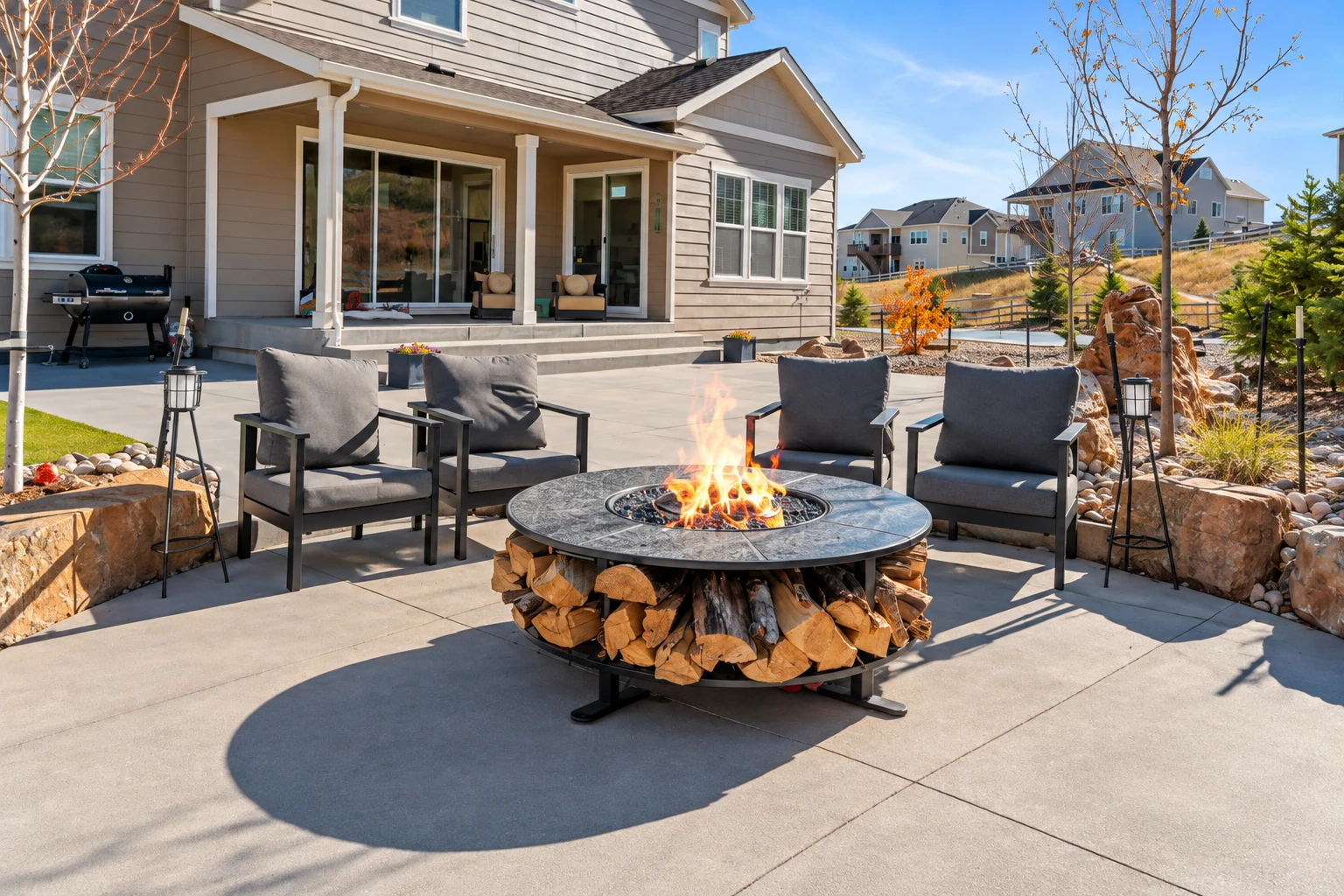
Concrete driveway building
We tear out cracked or sunken driveways, dig down to firm ground and pack a new base before the pour, because that base is what keeps a driveway from settling with the dirt.
Quality Chino Hills Concrete Company is a concrete contractor based in Chino Hills. We build driveways, patios, walkways, steps and slabs across Chino, and replace the old ones that have cracked, sunk or started holding water.
Most of the calls we get from Chino start with a driveway that's cracked or dropped at one corner, or a patio where water sits after it rains. Usually the slab isn't the whole problem. The subgrade, the ground the slab sits on, was raked flat instead of dug out and packed, so it settled and took the concrete with it. We're based next door in Chino Hills and do the same work in Ontario and Diamond Bar.
Heat is the other thing we plan around here. In a normal year Chino sees about 99 days at 90°F or hotter, and 23 of those go past 100°F, so in summer we pour early in the morning. Concrete that goes down in the midday sun dries too fast on top and can end up weak and dusty a year later.
Your price moves with the size of the job, how much old concrete comes out, how much base work the ground needs and the finish you pick, since a plain broom finish, the light texture that keeps it from getting slick, costs less than stamped. The schedule turns on the weather and the curing, the wait while the concrete hardens before it can take foot traffic and later a car. I put your figure in a written estimate that spells out what's included and what isn't.
If the budget's tight, the fancy finish is what I'd cut, not the base. Nobody sees the packed base on day one, but it's what keeps the slab from sinking.
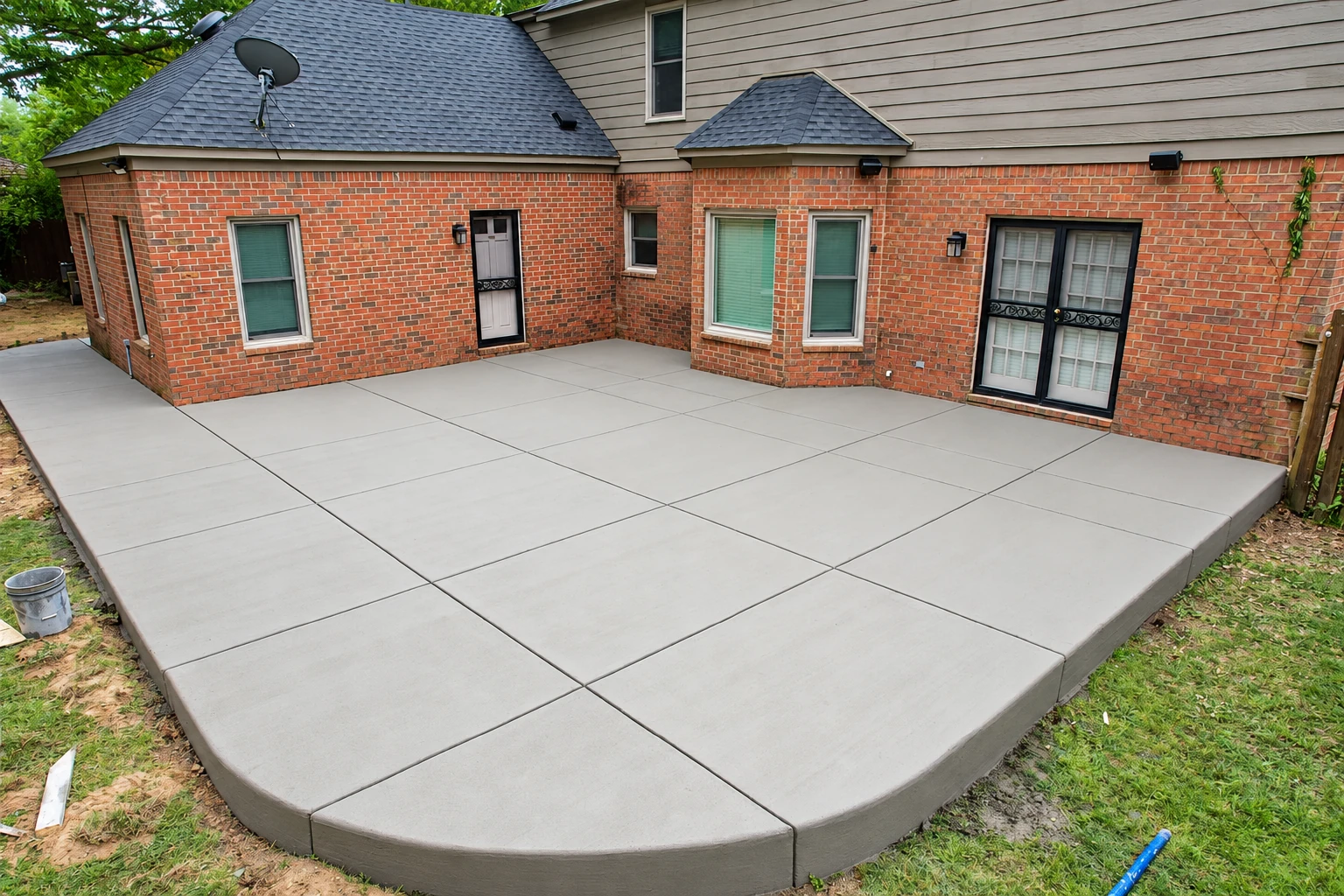
We check where the water goes before we set any forms, so the new slab falls away from your house instead of sending rain back toward the foundation or garage.
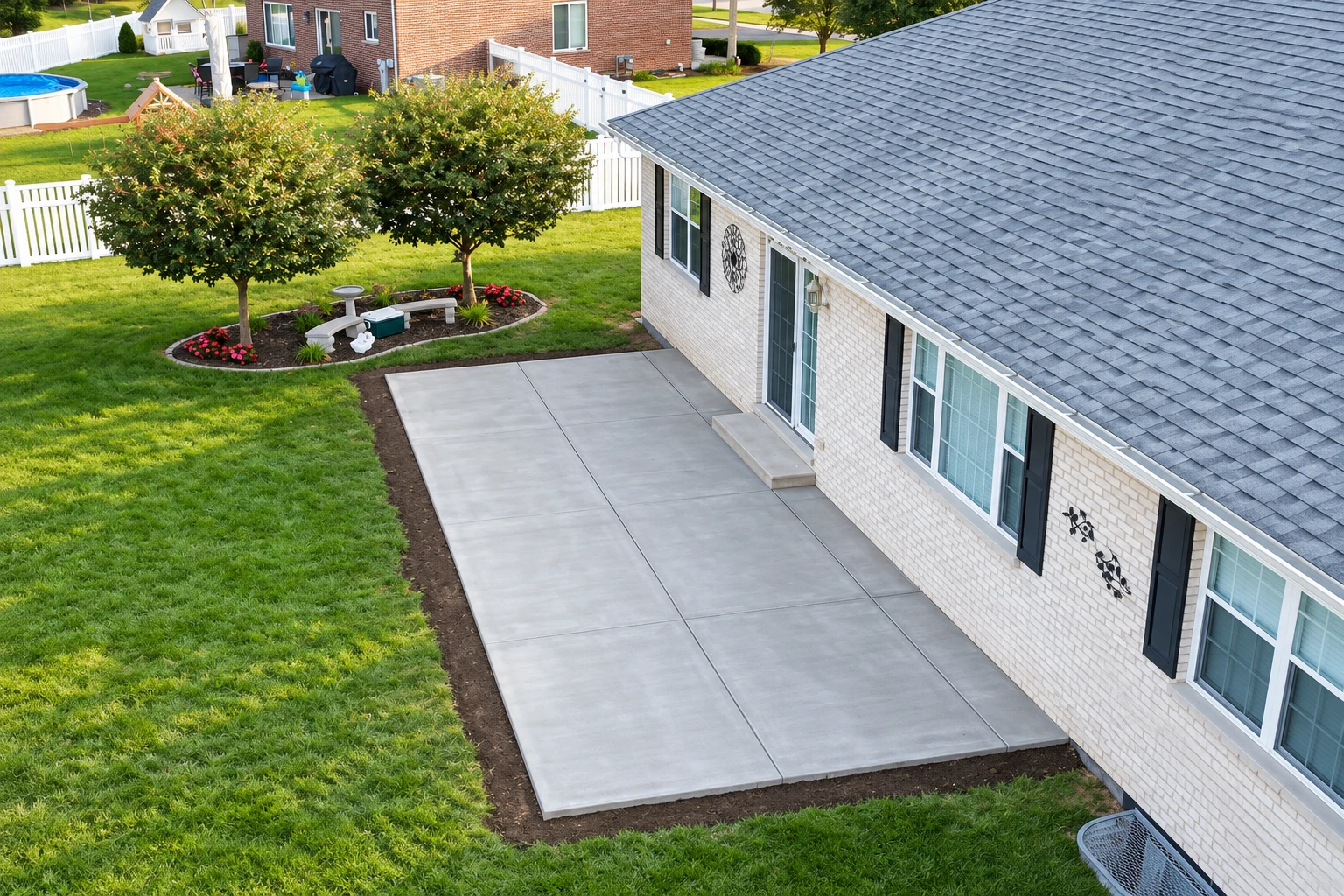
Concrete cracks, and control joints, the grooves cut into the slab, give it a planned place to do that. We cut them soon after the pour so cracks usually follow those lines.
We tear out cracked or sunken driveways, dig down to firm ground and pack a new base before the pour, because that base is what keeps a driveway from settling with the dirt.
Most patios we pour go in where lawn used to be, so we dig out the soft ground, pack a base and slope the slab so rain runs off instead of pooling.
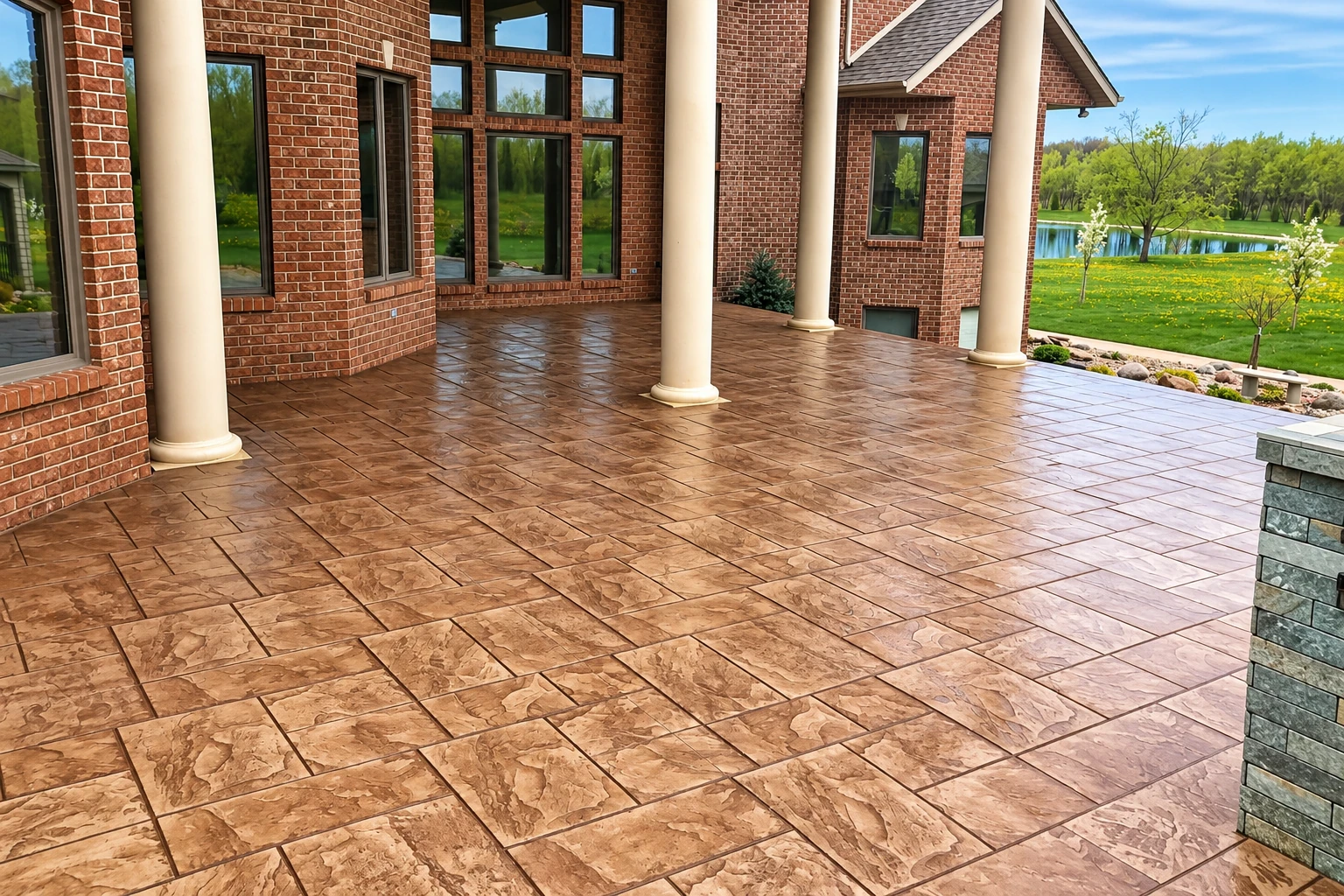
We press a stone, brick or wood pattern into the fresh concrete and add color, a common pick for front walks and patios where plain gray looks too bare.
Walkways get replaced when roots or settling lift a panel into a trip edge. We set the new walk so it meets your porch and driveway without a lip.
We break out cracked or oil-soaked garage floors and pour a new slab with rebar, the steel bars that help hold concrete together and keep cracks tight under parked cars.
Colored, exposed-aggregate and scored finishes dress up entries and patios. I go over what each one adds to the work before you pick, so the choice isn't a guess.
Where a yard steps up or down, we build concrete retaining walls on footings with drainage behind them, because a wall that traps water is the one that starts leaning.
Interior slabs for additions, workshops and converted rooms go down level and smooth, so flooring can go right on top once the concrete has finished curing.
Pool decks get a textured surface that grips wet feet and a slope that carries splash water away from the pool edge and the house.
Front and back steps that have cracked or pulled away from the house get rebuilt with even rises, so nobody catches a toe on one step taller than the rest.
Slab foundations for additions, garages and backyard units start with the base and the steel, since those are what the building sits on for decades after we leave.
We dig, form and pour foundations for new structures, and I walk through the plans with you first so the work in the ground matches what's on paper.
Parking areas for shops, churches and small businesses get a thicker slab and more steel than a home driveway, because delivery trucks and daily traffic are hard on concrete.
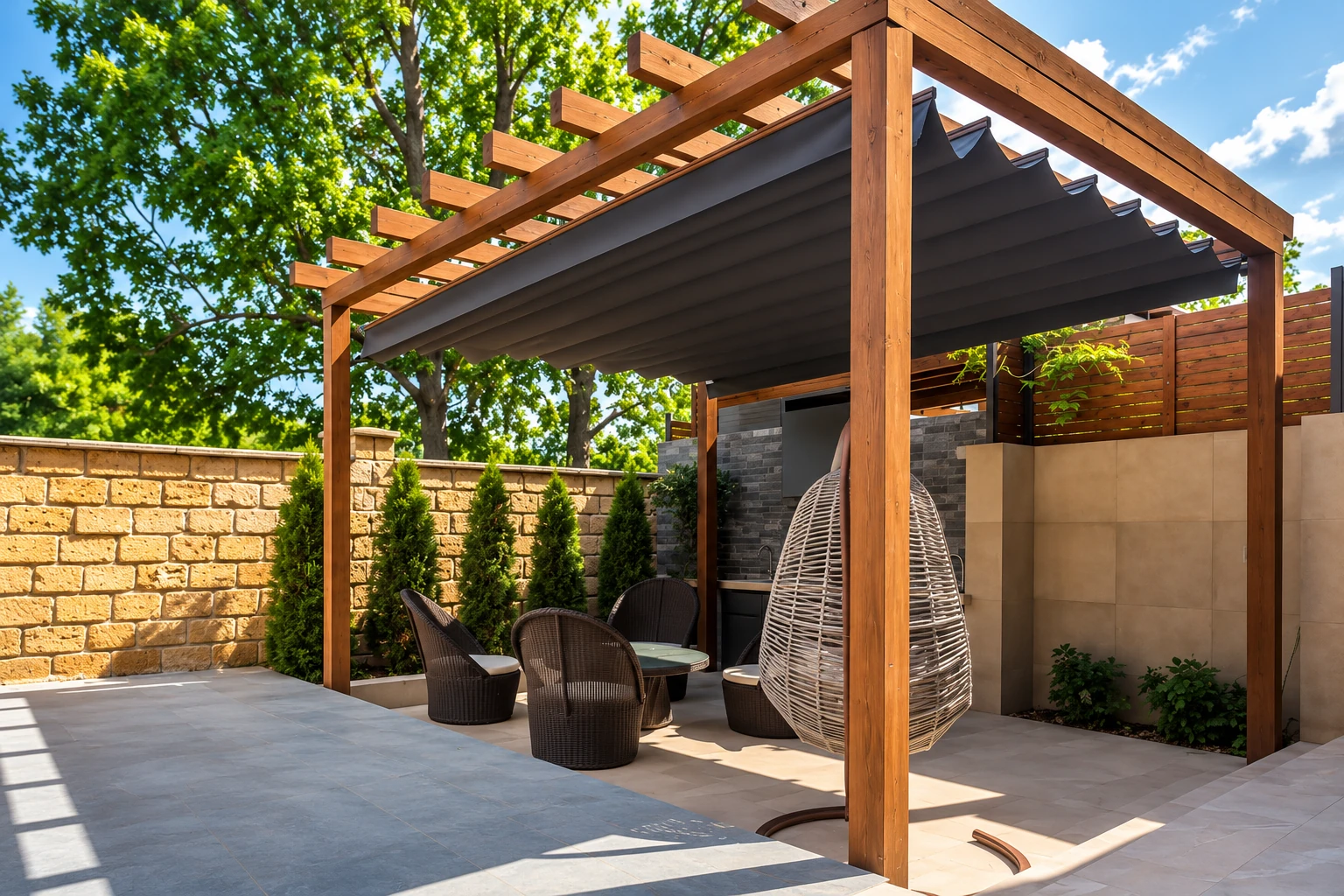
Footings for patio covers, walls and posts are sized for the load they carry, because a footing that's too small lets whatever sits on it sink over time.
When a slab or foundation has dropped, I look for what caused it before quoting a lift, because raising it without fixing the cause usually means it drops again.
Saw cutting gives clean lines for new doorways, plumbing trenches and partial tear-outs, so the concrete that stays isn't cracked or chipped by breaking it out by hand.
Send the form and we'll get back to you within one business day to set a time. I come out, look at the job and write you a free estimate, with no obligation to book.
I'm the one who comes out, looks at the slab and the ground around it, and writes the estimate, so whoever quotes your job has actually stood on it.
Your estimate comes in writing and lists what's included and what isn't, so tear-out, base work and finish are spelled out before you sign anything.
A crew lead and our crew do the work, and I stop by while it's going, so there's someone to ask questions on the day of the pour.
These are the questions Chino homeowners ask us most about permits, licenses and who's allowed to do concrete work on their property.
It may, and the city's Building Division is where to ask. Chino requires a building permit for all work except what the state codes exempt, and its examples of exempt work are things like painting, carpet and tile, not concrete. When a job needs a permit, we handle the application and set up the inspections, and if we're unsure, we check with the city first.
About 180 days, going by the city's permit FAQ, which was written before the current code. It says a permit expires 180 days after it's issued or 180 days after work stops. The Building Official can grant one 180-day extension at no cost, as long as a letter giving the reason arrives before the permit expires.
Yes. The City of Chino requires a business license from anyone doing business in the city, and it says that includes contractors from out of town. A city business license is good for one year, so it's fair to ask any contractor you're considering whether theirs is current.
A contractor needs a state license when the job needs a building permit, uses any additional workers, or costs $1,000 or more in labor and materials, across one or more contracts. That's the California Contractors State License Board's rule for anyone who builds or alters a structure. We're licensed and insured, and you can ask about it at the estimate.
These cities have their own page on our site, and we work in others around Chino Hills too. If you don't see yours listed, call and ask.
Call (909) 308-0181 or use the form, and I'll tell you straight whether that old concrete needs replacing or just a repair.