Replacing a sunken, cracked slab
A driveway or walk that has sunk, cracked through or holds water usually has a base problem. On sloped lots that take heavy rain, we look at where water runs before we pour again.
Discuss your projectQuality Chino Hills Concrete Company builds the concrete homes and businesses stand on, and we start every job with the ground underneath, because the base decides how long the surface holds up.
Most calls we get come down to fixing a slab that has started to fail or adding concrete where you want more usable space.
A driveway or walk that has sunk, cracked through or holds water usually has a base problem. On sloped lots that take heavy rain, we look at where water runs before we pour again.
Discuss your projectA new patio, pool deck, set of steps or parking area makes more of your property usable. We plan the slope first so the new concrete sheds water away from the building.
Discuss your projectYour quote spells out what's in it and what isn't, like tear-out, base, rebar and finish, so you can hold it up against anyone else's line by line.
If a crack can be filled or one bad section cut out and replaced, I'll tell you, even though a full tear-out would mean more work for us.
When your job needs a permit, we file the application with the local building office and set up the inspections, and we tell you what to expect before we start.
Quality Chino Hills Concrete Company is a concrete contractor in Chino Hills, CA, with 16 services that run from a new patio to the slab under a house. Most problems we fix come down to what's under the concrete, so that's where we start. Your price moves with the size of the area, how much old concrete comes out, how much digging and base the ground needs, and the finish you pick. The schedule turns on whether the job needs a permit and inspections, and on the weather for the pour. Your estimate puts your own figure in writing.
We tear out the old driveway, dig down and pack a firm base, then pour with rebar, steel bars that keep cracks from spreading apart, so it holds up under your cars.
A patio sized for how you'll use the yard, sloped so rain runs away from the house, with a finish that's easy on bare feet and less slick when wet.
Concrete pressed with a pattern while it's still wet, so a patio, walk or pool deck takes on the look of stone, brick or tile, colored to suit your house.
Walkways from the driveway to the front door or around the side yard, poured level and with joints cut so cracks follow straight lines we chose, not random ones.
A garage floor poured flat for parking, a workbench or storage, with the edge at the door set so the floor and the driveway meet evenly instead of leaving a lip.
Color, exposed stone, saw-cut patterns and borders that give a front entry or backyard more than plain gray. We go over the options with you before anything is poured.
Concrete walls that hold back soil on a sloped lot, built with drainage behind them so water doesn't build up and push. Some walls need a city permit, and we check first.
Interior floors for homes, shops, warehouses and business spaces, poured on a prepared base and finished smooth or textured for the kind of traffic the room gets.
A deck around your pool with a textured surface for wet feet, sloped away from the water and the house so splashes and rain run off instead of pooling.
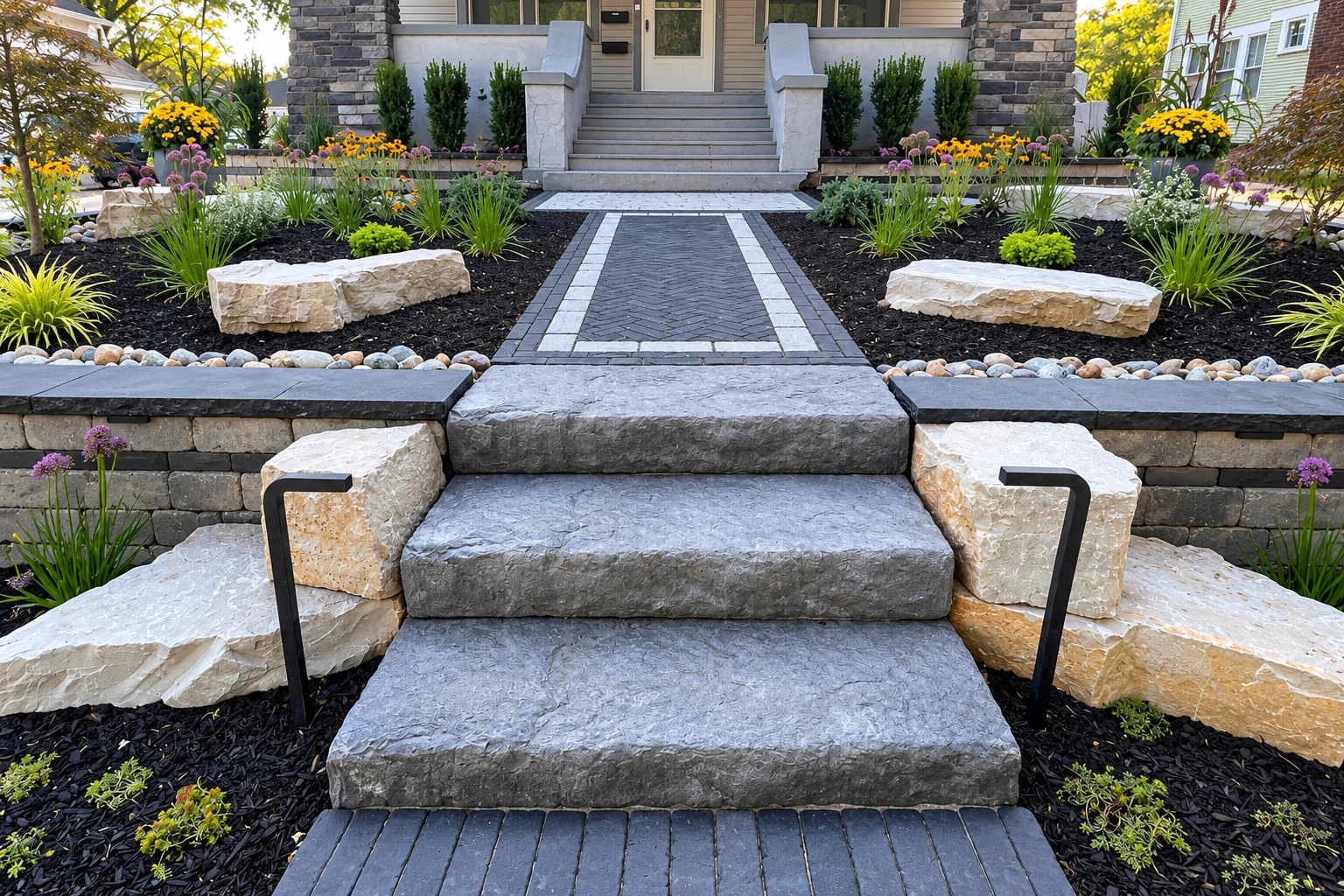
Front, back and garden steps with every step the same height so nobody catches a toe, set on a packed base so they don't pull away from the house.
The slab a new house, addition, garage or outbuilding sits on, poured over a dug-out, compacted base and built to the plans so the walls go up on a level floor.
Foundations for new homes, additions and commercial buildings, dug, formed and poured to the plans, with the inspections the job calls for set up before anything is built on top.
Parking areas for businesses, churches and apartment buildings, laid out for how cars and delivery trucks move and sloped so rain drains off instead of standing.
Footings are the concrete that carries a wall, post, patio cover or addition. We dig them to the depth the plans call for and pour them solid before anything goes on top.
When part of a slab or foundation has sunk, we find out why before lifting it, because raising it without fixing the cause usually means it settles again.
Clean saw cuts in existing concrete for a new door, a plumbing trench or a damaged section that has to come out without cracking the rest of the slab.
I started on the sales side of concrete, writing up driveways and patios for homeowners, then moved onto the crew to learn the work hands on. I opened Quality Chino Hills Concrete Company in 2023. Concrete cracks, slabs move and some jobs need more than you'd expect, and I'd rather you hear that from me before you sign.
We're licensed and insured, and every job is backed by our satisfaction guarantee. You can read more about us and how we work.
I come out, look at the job and write the estimate, so the person who measured your slab is the one you call with questions, and you don't explain things twice.
A crew lead and our crew do the work, and I stop by while it's going to make sure it matches what we wrote up for you.
We work across Chino Hills and the cities around it, like Chino, Diamond Bar, Corona and Eastvale. If you don't see your city listed, call and ask.
We'll get back to you within one business day to set a time. I come out, look at the job and give you a written estimate with no obligation.
I look at the slope, the old concrete and how we'd get equipment in, because those change the price more than anything I'd hear on a phone call.
Cracks, a sunken section, water pooling by the garage or a bare patch of yard. A line or two helps me know what to look for when I come out.
You keep the written estimate whether you book with us or not, so take your time and compare it against the other bids you get.
Examples of broom finish, the light lined texture that adds grip, plus stamped and colored concrete, to help you show us what you like.
Straight answers to what people ask before a concrete job, from cracking and curing to permits and licenses in Chino Hills.
Usually because they don't cover the same work. The big gap is the subgrade, the ground the slab sits on. One crew digs it out and packs it firm, another rakes it level and pours, and that slab settles with the dirt. If the budget's tight, I'd cut the finish before the base, because the base can't be fixed later without tearing out the slab.
Probably somewhere, because concrete shrinks as it dries and nearly every slab cracks. What we control is where and how much. We cut control joints, straight grooves that give the crack a place to happen, on time instead of late, and the rebar in the slab holds any crack tight. A packed base keeps the slab from sinking.
You'll wait longer to drive on it than to walk on it, and I'll give you both waits for your pour at the estimate. That wait is curing, the time concrete needs to gain strength before it carries weight, and driving on it early can crack a slab that looked fine. In hot weather we pour early in the day, because a fast-drying top turns weak and dusty.
Some concrete jobs do, and the city decides which, so when we're not sure we check with the city's Building and Safety Division before we start. Digging or grading needs a permit unless the city lists it as exempt, and work on the public sidewalk, curb or street needs a separate encroachment permit. When a permit's needed, we apply and set up the inspections.
It depends on its height and where it sits. A wall up to 4 feet tall, or one holding back less than 3 feet of soil, skips the building permit only when all of the city's conditions hold, including a gentle slope behind it, no nearby building pressing on it and every part more than 5 feet from a property line. We check before we dig.
In most cases, yes. The California Contractors State License Board requires one when the project needs a building permit, uses employees, or the contracts total $1,000 or more in labor and materials. Ask everyone you're comparing for their license before you sign, the same way you'd ask for a written quote.
Call (909) 308-0181 or use our contact page to set a time, and I'll come out and write up what your job needs.