Bare dirt behind the house
A lot of backyards still have dirt or tired grass right off the back door. A new slab gives you a clean, flat spot for a table and chairs, and less mud tracked inside.
Tired of a cracked, sunken patio or bare dirt out back? We pour a new concrete patio with the joints and curing planned first.
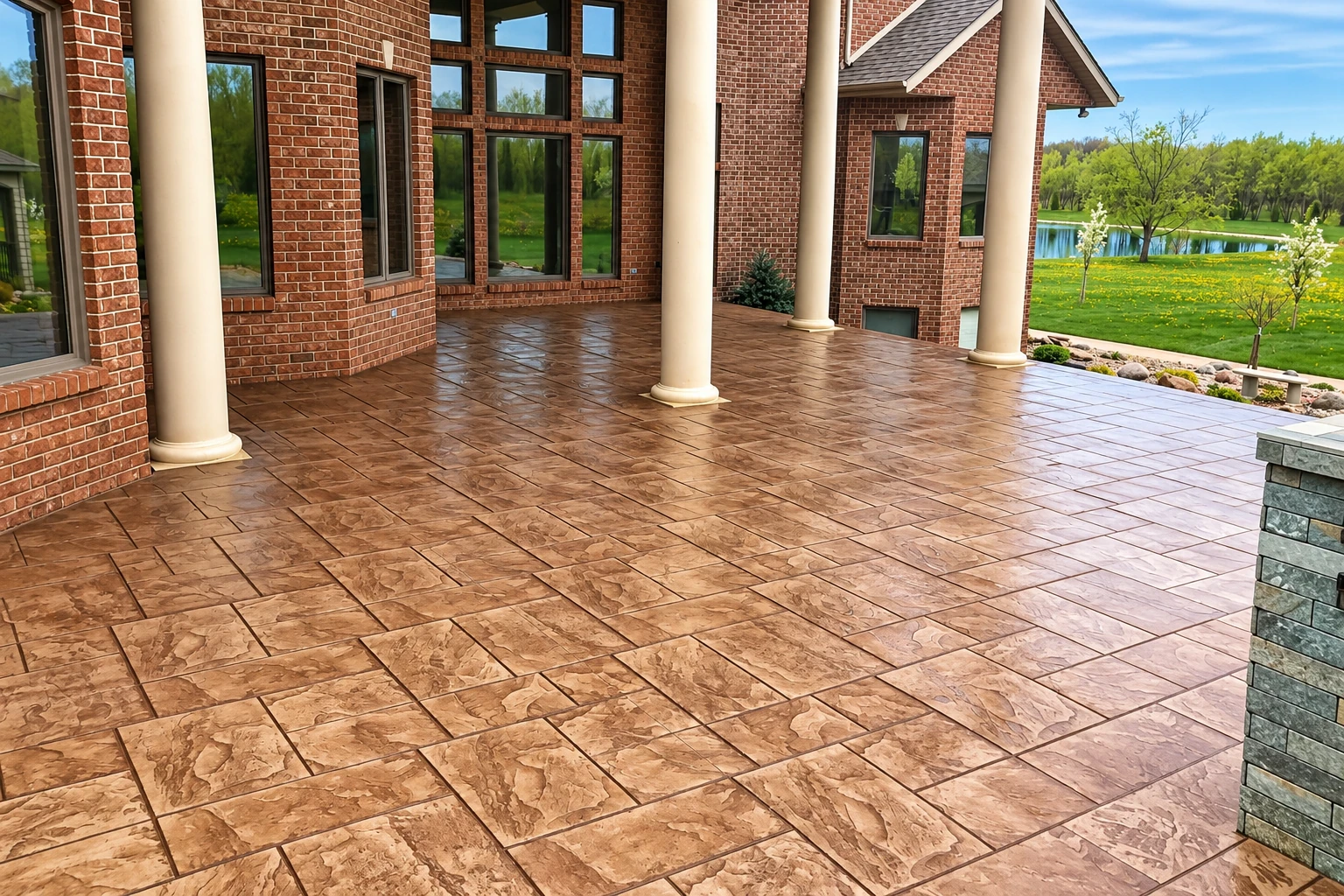
Concrete patio construction in Chino Hills means digging out the yard, building a packed base, then forming, pouring, finishing and curing a new slab, so you end up with a solid, flat place to sit, grill and set furniture.
Most people call us with bare dirt off the back door, an old patio that's split and sunk, or pavers that won't stay put. Here's the hard part first. Concrete cracks, and no crew can honestly promise yours won't, so what we work on is where it cracks and how well the slab holds up.
The price moves with the size of the patio, whether old concrete has to be broken out and hauled away, how far we carry concrete from the truck, and the finish you pick, since a plain finish costs less than a pattern or color. The schedule turns on the weather, on whether the city wants a permit, and on how long the slab cures before you put weight on it. I come out, measure and write the estimate myself, and you get it in writing with what's included and what isn't. We're licensed and insured, and whoever you hire, the state's concrete license covers forming, pouring and finishing flat work like this, so the city sends homeowners to the Contractors State License Board to check.
Before the pour I show you where the joints go and why, because the joint layout decides where your patio cracks. You see it on paper before it's set in concrete.
Your estimate is written out with what's included and what isn't, so you can line it up against other bids and know exactly what you're buying before you sign anything.
A crew lead and our crew do the work, and I stop by while it's going, so the person who wrote your estimate also sees the job match it.
We start under the slab, because that's where most patios fail. Our crew digs out the soft dirt and packs the subgrade, the ground the slab sits on, instead of raking it level and pouring over it, since a raked base settles and takes the patio with it. If something has to come out of the budget, I'd rather it be the finish than the base, because you can redo a surface someday but you can't fix what's under it without tearing the patio out.
Before the pour I walk you through the joint layout. Control joints are the straight grooves we cut into the slab so it cracks along a line we picked instead of across the middle, and they have to go in on time to do their job. We usually finish the top with a broom finish, a light brushed texture that gives your feet some grip when it's wet. If you want a pattern or color instead, we do that as stamped concrete, and if you need a path out to the side gate or the driveway, we can pour it alongside with our concrete sidewalk building work.
On hot days we plan around the heat, because concrete placed in the midday sun can end up weak and dusty on top. Curing, keeping the new slab damp so it hardens all the way through, starts as soon as we finish, and before we leave I'll tell you if any of it falls to you.
A lot of backyards still have dirt or tired grass right off the back door. A new slab gives you a clean, flat spot for a table and chairs, and less mud tracked inside.
When an old patio has dropped or split, we break it out and haul it off first. Then we rebuild the base, because pouring over a failed slab just repeats its problems.
If a patio cover is in the plans now or later, tell me at the estimate so we know where the posts will land and can plan the slab around them before anything's poured.
Some people want more than a sitting area, like space for a grill, a fire pit or somewhere for the kids to play. We size and shape the slab around how you'll use the yard.
Send the form and we'll get back to you within one business day to set a time. I come out, measure and write your estimate on site, free and with no pressure to book.
A rough length and width, or even a photo of the yard, helps me show up with the right questions and a better idea of what your patio is going to need.
If a patio cover is coming now or down the road, say so in the form. It changes how we lay out the slab and what we check with the city before starting.
Tell us if there's an old slab to remove or if the only way to the backyard is a narrow side yard. Both change the work and the price, so I want to see them.
Broom finishes, stamped patterns, color and walkway layouts to look through, so you have something to point at when we talk about your yard.
Straight answers to what Chino Hills homeowners ask about patio cost, cracking, hot-weather pours and permits before they hire anyone.
Across California, a 4-inch concrete slab, installed with labor and materials, usually runs about $9 to $18 per square foot. That's the going range statewide, not our price. Where your patio lands depends on what I find when I look at the yard, and your own number comes in the written estimate I put together after that visit.
Probably somewhere, yes. Cracks in concrete can't be prevented entirely, but well-planned joints control where they form and keep them small, which is why it's fair to ask every bidder where the joints will go. Wire mesh won't stop cracking, though it tends to keep cracks from opening up, and isolation joints let the patio move separately from your sidewalk, steps or garage slab.
Early in the morning whenever possible. Heat, low humidity and wind all change how concrete is mixed, hauled and placed, and an Illinois concrete trade group advises morning pours in hot weather. The same group advises dampening the forms and the subgrade first and putting up sunshades and windbreaks. So if a warm day is coming, plan on an early start.
Right after it's finished, using a curing compound, a wet cover, curing paper or seven days of keeping it soaked, according to that Illinois trade group. Ask any crew which method they'll use and whether any of it falls to you afterward. Before we leave, I tell you if there's watering or covering left on your side.
Check with the city before you build. Chino Hills Building and Safety issues permits, which are generally required for new building and site improvements, and its list names patio covers but not concrete patios. The city says the best way to know is to call that office at (909) 364-2780. When a permit is needed, we handle the application and set up the inspections.
Call (909) 308-0181 or use the form. We're based in Chino Hills and work the cities around it, so ask if yours isn't listed.